
P5 Maths Tuition Singapore: Guide for Parents
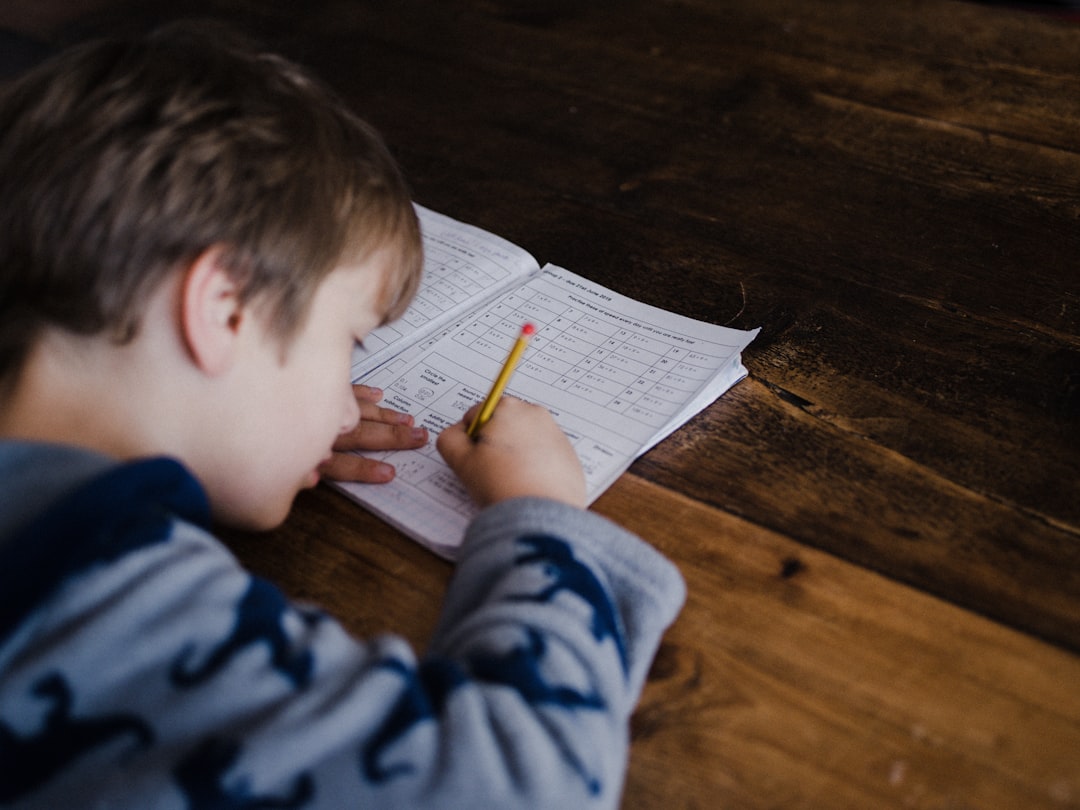
For many Singapore families, Primary 5 is the year that changes everything. The MOE syllabus takes a significant step up in complexity, and children who coasted through P4 suddenly find themselves struggling with ratio, speed, and percentage problems they have never encountered before. If you are weighing up whether to start P5 Maths tuition, this guide walks through what the syllabus demands, where students typically stumble, and what good support at this level actually looks like.
It is also worth understanding the timing. P5 is the first year of the two-year PSLE examination window. How your child builds — or fails to build — their maths foundation this year will directly shape how much ground they need to recover in P6. Starting tuition at P5 rather than waiting until P6 is almost always less stressful and more effective.
What the MOE P5 Maths Syllabus Actually Covers
The P5 Maths syllabus introduces several topics that are genuinely new and substantially harder than anything in P4. Parents who assume the syllabus is a gradual progression are often surprised by how steep the jump feels.
Key topics introduced or extended in P5 include:
- Fractions — division of fractions, including dividing a fraction by a whole number and vice versa. The conceptual leap here trips up many students who are procedurally competent but do not understand why the algorithm works.
- Ratio — comparing and simplifying ratios, solving problems involving ratio and change, and interpreting word problems that require students to model relationships between quantities.
- Percentage — percentage increase and decrease, and working backwards from a result to find the original quantity. These are multi-step problems that demand careful reading and structured working.
- Speed, distance, and time — introduced formally in P5. Problems involving average speed, relative speed, and journeys with changing rates are standard by mid-year assessments.
- Area and perimeter of composite figures — combining rectangles, triangles, and circles to find total areas or missing dimensions. These problems test spatial reasoning as much as arithmetic.
- Volume — finding the volume of cubes and cuboids, and solving practical problems that involve displacement or filling containers.
- Decimals — extended operations including multiplication and division to several decimal places, and conversion between fractions, decimals, and percentages fluently.
If any of these topics looks unfamiliar from your own schooling, that is a useful signal: the P5 syllabus is genuinely more abstract than most parents remember primary maths being. For a full picture of what your child will face through to PSLE, the PSLE Maths tuition guide covers the examination structure and scoring in detail.
Why P5 Is a Critical Year — and Why Waiting Is Risky
Primary 5 is the first year of the two-year PSLE preparation window. The examination is sat at the end of P6, but the syllabus tested includes everything taught in both P5 and P6. A child who finishes P5 with shaky fundamentals in ratio or percentage carries that weakness into the examination year, where the pressure to cover new content leaves little time for remediation.
The AL (Achievement Level) scoring system used in PSLE since 2021 means that each subject is scored AL1 to AL8, with AL1 being the best result. A child’s four-subject PSLE Score determines which secondary schools they can choose. Maths — alongside English — is one of the subjects where fine margins matter. A student who masters ratio and speed in P5 is better placed to tackle the more complex problem sums in P6 without needing to relearn foundational concepts under examination pressure.
There is also a motivational dimension. Students who fall significantly behind in P5 sometimes disengage from maths entirely, developing anxiety that makes P6 recovery much harder. Early intervention at P5 — before disengagement sets in — is considerably more straightforward than rebuilding confidence in the PSLE year.
Common P5 Maths Struggles: Where Students Get Stuck
Based on patterns seen consistently across primary schools in Singapore, these are the areas where P5 students most commonly lose marks:
- Ratio problems involving change. Questions that describe a situation before and after an event — “Ali gives some sweets to Beng; now the ratio is…” — require students to set up a consistent model. Many students try to work with the ratios directly without anchoring them to actual quantities.
- Percentage increase and decrease. Working out a 20% discount is manageable; working backwards from the discounted price to find the original price is harder. Students often apply percentage calculations in the wrong direction.
- Speed-distance-time problems. The formula itself is not difficult. The challenge is multi-step word problems where speed, direction, and time all vary — and where students need to organise information before calculating.
- Complex model drawing. The bar model method, taught from P3 onwards, becomes more demanding in P5. Problems with multiple conditions require students to draw, label, and revise their models systematically. Students who never developed disciplined model-drawing habits find this increasingly costly.
- Fractions and mixed operations. When fractions appear inside larger problems — combined with ratio, percentage, or speed — students who are unsure of fraction operations make errors that cascade through their working.
If your child is making errors across more than two of these areas, that is a clear signal that tuition — starting now rather than at P6 — would be worthwhile.
What Good P5 Maths Tuition Looks Like
Not all tuition is equally useful at this level. A tutor who simply gives your child more worksheet practice without diagnosing the underlying gap is providing limited value. Good P5 Maths tuition has a few distinctive characteristics.
Closing gaps from P4 first
A competent P5 tutor starts by identifying what your child missed or did not consolidate in P4. Fractions, basic ratio, and area concepts all feed directly into P5 topics. If those foundations are shaky, the tutor should address them early — even if it feels like going backwards temporarily. This is where starting in P5 rather than P6 is an advantage: there is time to do this properly.
Teaching the model method with rigour
Bar model drawing is the central problem-solving strategy for PSLE Maths. A good tutor will not just show students how to draw a model for one problem type — they will teach students to read a question, identify the relationships between quantities, and construct a model that externalises those relationships before any arithmetic begins. The PSLE Maths heuristics and model method guide explains this in more detail if you want to understand the technique before speaking to tutors.
Exam technique alongside conceptual mastery
P5 school assessments use the same two-paper format as PSLE: Paper 1 (no calculator, shorter items) and Paper 2 (calculator allowed, problem sums). A good tutor helps students understand how marks are allocated, where to show working, and how to check answers systematically within time constraints. This examination literacy pays dividends when the real PSLE arrives.
Honest feedback
Your child’s tutor should be giving you a clear picture of progress — which topics are improving, which remain weak, and what needs to change. Vague reassurances without specific topic feedback are a warning sign.
When Tuition Helps — and When It May Not Be Necessary
Tuition is a tool, not a guarantee, and not every P5 child needs it. Here is a straightforward way to think about it:
- Tuition is likely useful if: your child is scoring below class average consistently; they cannot explain what went wrong in a test even when they have the answer key; they are anxious about maths or avoiding homework; or they are strong overall but have specific topic gaps (e.g., ratio) that school lessons have not resolved.
- Tuition may not be necessary if: your child is performing comfortably, engages with challenging problems independently, and can self-correct errors when reviewing their work. In this case, a targeted P6 Maths programme closer to PSLE may be a more efficient use of resources.
- Tuition alone is not sufficient if: the root issue is study habits, attention, or reading comprehension rather than mathematical understanding. The tutor and family need to work on those issues in parallel.
For parents whose child has just completed P4 and is about to enter P5, it is also worth reading the P4 Maths tuition guide to understand which P4 topics commonly resurface as gaps in P5.
Tuition Rates and Format Options at P5
Primary Maths tuition in Singapore typically runs from $25 to $50 per hour for private tutors, depending on the tutor’s qualifications, experience, and whether sessions are conducted at the student’s home or online. Part-time tutors — including undergraduates and NIE-trained teachers — generally fall at the lower end of this range; full-time specialists with a strong track record tend to command rates at the higher end.
Small-group tuition (two to four students) is often available at tuition centres at slightly lower per-student rates, though the individual attention is naturally reduced. For P5 students with specific topic gaps who need targeted support, one-to-one tuition is usually more efficient. For students who are broadly on track but benefit from structured practice with peers, a small group can work well.
Online tuition is increasingly popular for primary students and can work effectively for older P5 children who are comfortable with screen-based learning. For students who need hands-on model-drawing guidance, in-person sessions often have an edge — a tutor physically guiding a child through constructing a bar model is harder to replicate on screen.
Frequently Asked Questions
When is the best time to start P5 Maths tuition?
The beginning of the P5 year — January or February — is the ideal time to start, as it gives the tutor scope to diagnose P4 gaps and address them before new P5 topics are introduced at school. Starting mid-year is still valuable, especially if your child struggled in the Semester 1 assessments. Waiting until P6 is possible but means the remediation window is shorter and the examination pressure is higher.
How many sessions per week does my child need?
One session of 1.5 to 2 hours per week is a reasonable starting point for most P5 students. Students who are significantly behind may benefit from two sessions per week initially, tapering to one once the main gaps are closed. Overscheduling tuition at the expense of rest, school homework, and independent revision is counterproductive — the goal is quality practice, not volume.
What questions should I ask a prospective P5 Maths tutor?
Ask how they will diagnose your child’s weak areas in the first session. Ask specifically whether they cover ratio, percentage, and speed-distance-time problems, and how they teach model drawing. Ask what feedback you will receive after sessions and how they measure progress. A tutor who can answer these questions clearly and specifically is far more likely to be effective than one who gives generic reassurances. The how to choose a tutor guide has a fuller checklist worth reviewing before you decide.
Is P5 Maths much harder than P4?
Yes, notably so. P4 Maths introduces fractions and basic area and perimeter, but the problems remain relatively straightforward and single-step. P5 introduces ratio, percentage increase and decrease, speed-distance-time, and composite area problems — all of which require multi-step reasoning and the ability to organise information before calculating. The jump is one of the sharpest in the primary school curriculum, which is why P5 is when many students encounter serious maths difficulties for the first time.
If you are ready to find a qualified P5 Maths tutor for your child, the most efficient next step is to browse tutors matched to your child’s level and needs. Find a tutor on AccTrain Academy and filter by subject and level to see experienced primary Maths tutors available across Singapore.