
Sec 1 Maths Tuition Singapore: Guide for Parents
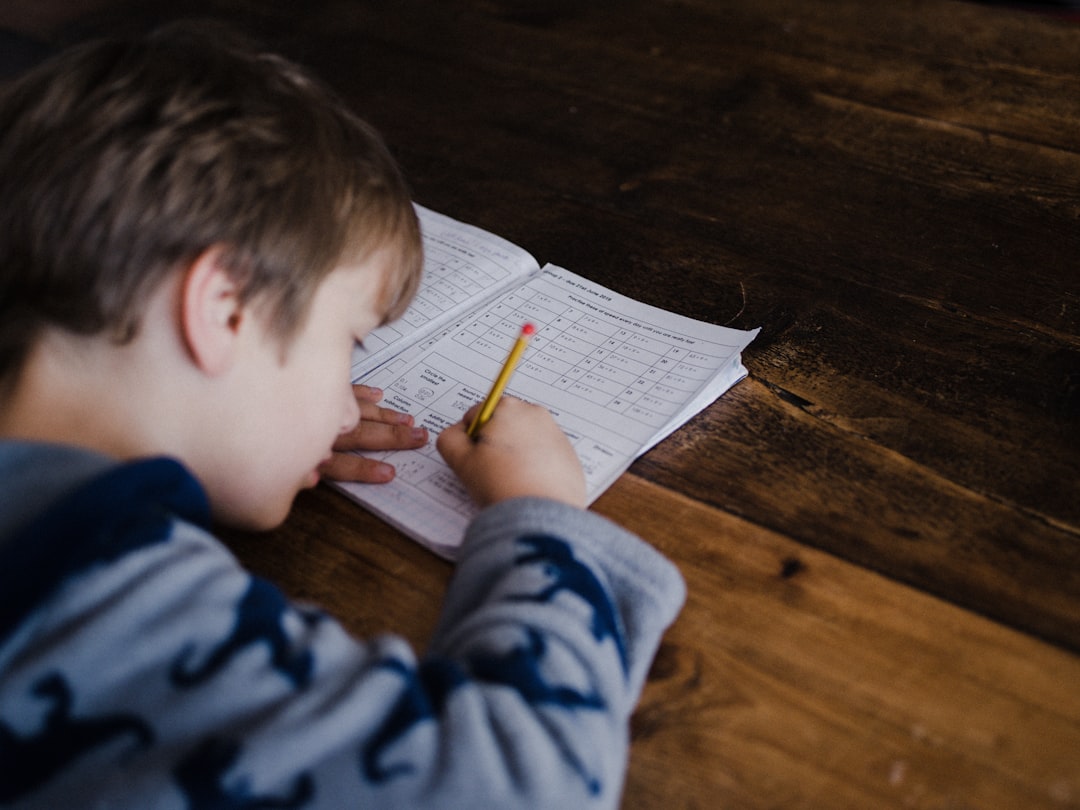
The jump from primary school to secondary school is one of the most significant academic transitions a child will experience in Singapore — and maths is often where the shock is felt first. Many students who performed well in PSLE find that sec 1 math tuition becomes a topic of conversation within the first school term, as algebra, negative numbers, and abstract reasoning begin to replace the familiar arithmetic and model-drawing methods of primary school. This guide helps parents understand exactly what has changed, what the MOE Sec 1 Maths syllabus covers, what trips students up most often, and how to decide whether tuition is the right support for your child.
This is not a decision that needs to be made in a panic. Some Secondary 1 students settle into the new syllabus quickly and find the structure of secondary maths more intuitive than the heuristic-heavy PSLE approach. Others — even strong PSLE scorers — find the conceptual shift difficult and benefit from early support. Understanding the landscape clearly makes it much easier to judge where your child stands.
What the MOE Sec 1 Maths Syllabus Covers
Secondary 1 Mathematics in Singapore sits within the O-Level Mathematics framework, which students will complete at the end of Secondary 4 or 5. The Sec 1 year is where foundational secondary concepts are introduced, and the MOE syllabus is organised around five content strands: Numbers and Algebra, Geometry and Measurement, Statistics and Probability, Trigonometry, and Vectors.
In Secondary 1 specifically, the focus falls heavily on Numbers and Algebra and Geometry and Measurement. Key topics include:
- Primes, highest common factor (HCF) and lowest common multiple (LCM) — extensions of primary concepts, now applied more abstractly.
- Integers, rational numbers, and real numbers — including negative numbers and operations on them.
- Approximation and estimation — significant figures and rounding in the context of problem solving.
- Algebraic expressions and formulae — expanding, factorising, and simplifying expressions.
- Linear equations in one variable — solving equations and translating word problems into algebraic form.
- Angles, triangles, and polygons — geometric properties and reasoning.
- Perimeter, area, and volume — extended to more complex composite figures and 3D shapes.
- Introduction to statistics — reading and interpreting data displays such as bar charts, pie charts, and dot plots.
The pace is noticeably faster than primary school. Teachers move through each topic within a few weeks, and students are expected to consolidate independently between lessons.
The Primary-to-Secondary Transition: Why Maths Feels Different
Understanding why secondary maths feels harder is the first step in addressing it. The change is not just about harder content — it is a fundamental shift in the type of thinking required.
Primary school maths, despite being genuinely demanding at PSLE level, is rooted in arithmetic and the model method. Students learn to draw bar models to represent ratios and fractions, and to work through multi-step problems by representing relationships visually. The answer is usually a number, and the path to it — however long — is largely procedural.
Secondary maths introduces algebraic thinking, where unknowns are represented by letters and manipulated symbolically. A student who has always solved “if 3 times a number minus 4 equals 11, find the number” by working backwards or drawing a model must now set up and solve 3x − 4 = 11 formally. This transition from concrete to abstract is genuinely cognitively demanding. It is not a sign of weakness when students find it difficult — it is a new mode of mathematical reasoning that needs deliberate practice to internalise.
The stakes are higher than they might appear. How a student handles this transition in Secondary 1 often determines whether they will be on track to take E Math (Elementary Mathematics) confidently at O-Level — and potentially A Math (Additional Mathematics) as well, which opens doors to STEM pathways and H2 Mathematics at JC.
Common Struggles in Secondary 1 Maths
Based on what tutors and secondary school teachers consistently observe, a few topic areas cause the most difficulty in Sec 1:
- Negative numbers and integer operations. Students who have only dealt with positive numbers in primary school often make systematic sign errors. Subtracting a negative number, or multiplying two negatives, feels counter-intuitive and requires careful practice to become automatic.
- Forming and solving algebraic equations. Translating a word problem into an equation is a skill that many Sec 1 students find difficult. They can often solve x + 5 = 12 but struggle to set up the equation in the first place from a paragraph description.
- Expanding and simplifying expressions. Errors in expanding brackets — especially when a negative coefficient is involved, such as −2(3x − 4) — are extremely common. Students who are not careful with signs accumulate errors that compound across a question.
- Ratio and proportion in an algebraic context. While ratio was a primary topic, secondary problems now involve algebraic ratios and proportion equations that feel very different from primary model-drawing approaches.
- Speed, distance, and time problems. These appear in a more algebraic form at secondary level and require students to form simultaneous equations or use algebraic substitution — a significant step up from primary rate problems.
- Geometric reasoning. Unlike calculation-heavy topics, geometry questions require students to state reasons formally (e.g., “angles on a straight line sum to 180°”). Many students understand the answer intuitively but cannot write the required justification.
What Good Sec 1 Maths Tuition Looks Like
Not all tuition is equally useful at this stage. Because the Sec 1 year is fundamentally about building a new conceptual framework — not merely practising more questions — the quality of instruction matters enormously.
A good Sec 1 maths tutor will:
- Diagnose the specific gaps first. Rather than starting from page one of a textbook, an effective tutor assesses where the student’s primary foundation has cracks — whether it is fractions, ratio, percentages, or problem-solving approach — and addresses these alongside the new secondary content.
- Teach algebraic thinking explicitly. Students need to understand why algebraic manipulation works, not just the steps. Tutors who explain the logic behind the rules — why we “do the same to both sides,” why we collect like terms — build durable understanding rather than brittle procedures.
- Focus on the worked-example cycle. The most effective secondary maths learning loop is: understand the concept, study worked examples, attempt similar problems, review errors, and repeat with variation. A tutor who simply assigns practice questions and marks them is doing less than half the job.
- Build exam technique from early on. Secondary school tests require students to show working clearly and to allocate method marks. Students who write only answers — a habit from primary MCQ-heavy papers — will lose marks even when their reasoning is correct.
- Align with the school’s pacing. Tuition that runs ahead of or behind the school’s syllabus sequence can confuse students. A good tutor will ask what topics are currently being taught and ensure their sessions reinforce the school curriculum rather than working against it.
For a broader picture of how to select a tutor, the guide on how to choose a tutor in Singapore covers the questions worth asking before committing.
When to Start Sec 1 Maths Tuition
This is one of the most common questions parents ask, and the honest answer is: it depends on your child’s situation, not on a fixed calendar.
Starting at intake (January of Secondary 1) makes sense if your child struggled with upper primary maths, had a difficult PSLE maths result, or is entering a school with a demanding maths cohort. Getting ahead of the transition — rather than waiting for the first school test results — gives the tutor time to work on conceptual foundations rather than rushing to patch gaps before an exam.
Waiting to see how the first term goes is a reasonable approach for children who performed well in primary school and who are generally confident learners. If the first term results come back strong, you can monitor without tuition. If they reveal gaps — particularly with algebra or negative numbers — starting tuition in Term 2 still gives plenty of time before end-of-year examinations.
Tuition may not be necessary if your child is coping well with school assignments, can complete homework independently, and understands concepts when they review their own errors. The test is not whether marks are perfect — it is whether understanding is developing. Some students simply need good study habits and consistent effort, which a tutor can encourage but cannot substitute for.
If your child is eventually planning to take A Math in Secondary 3 — with an eye on science JC courses — building a very strong E Math base in Sec 1 and 2 is genuinely important. A weak secondary 1 foundation often resurfaces as a problem two years later. You may also want to read ahead to our guide on Sec 2 maths tuition to understand what the next year brings.
Typical Rates for Sec 1 Maths Tuition in Singapore
Sec 1 falls within the secondary school bracket for tuition pricing. As a broad guide, you can expect:
- Part-time tutors (undergraduates or those without teaching credentials): approximately $35 to $45 per hour.
- Full-time private tutors with several years of experience teaching secondary maths: approximately $50 to $65 per hour.
- MOE-trained or former school teachers with a formal teaching background: approximately $60 to $80 per hour or above, depending on experience.
- Small group sessions (2–4 students): often $30 to $50 per student per hour, depending on group size and tutor profile.
These are indicative ranges, not fixed market prices. Rates vary with subject difficulty, session format, and the tutor’s track record. For a more detailed breakdown across all levels and subject types, the Singapore maths tuition rates guide is a useful reference.
Frequently Asked Questions
Is sec 1 maths much harder than PSLE maths?
The content is not necessarily harder in a raw difficulty sense — the jump from PSLE to Sec 1 is less steep than, say, the jump from Sec 2 to Sec 3. However, the type of thinking required changes significantly. PSLE maths is rooted in arithmetic, model-drawing, and pattern recognition. Secondary 1 introduces formal algebra and symbolic manipulation, which requires a different cognitive approach. Students who struggle are not necessarily weak at maths — they are adapting to a new way of thinking, and many catch up quickly once that clicks.
Should my child get tuition for both maths and other subjects in Secondary 1?
Secondary 1 involves a significant increase in the number of subjects, and overloading a child with tuition for every subject can be counterproductive — it leaves little time for independent work, rest, or the kind of thinking that builds genuine understanding. A sensible approach is to identify the one or two subjects that are causing the most difficulty and address those first. Maths is often the priority because of its cumulative nature: gaps in Sec 1 compound in Sec 2 and beyond. If your child also needs support in English or science at this stage, our guides on Sec 1 English tuition and Sec 1 science tuition may help you think through priorities.
How do I know if a Sec 1 maths tutor is actually effective?
After four to six sessions, you should be able to observe some early signals. Your child should be able to explain, in their own words, concepts that were previously confusing. Homework completion should become less stressful. If school test results come back, the error patterns should shift — not necessarily disappearing, but becoming less systematic. A tutor who simply assigns practice questions and marks them without explaining errors is unlikely to drive improvement. Ask your child what they learned in each session, not just whether they completed the work. If they cannot articulate anything beyond “we did algebra,” the sessions may not be as effective as they should be.
What is the difference between E Math and A Math, and does it matter in Sec 1?
In Secondary 1, all students follow the same Mathematics syllabus — the E Math and A Math split happens in Secondary 3. However, what happens in Sec 1 and 2 matters enormously for that decision. Students who build a solid algebraic foundation in lower secondary are much better positioned to take on A Math — and by extension, to pursue STEM pathways at JC. Students who have chronic gaps in Sec 1 often find A Math inaccessible when it is offered. This is one reason early tuition, if needed, is worth considering: it is not just about passing Sec 1 exams, it is about keeping future options open.
If you are ready to find support for your child’s Secondary 1 maths journey, the most practical next step is to connect with a tutor who understands both the secondary syllabus and the transition challenges your child is navigating. Find a tutor on AccTrain Academy and filter by subject and level to see qualified secondary maths tutors available across Singapore.