
P3 English Tuition Singapore: Guide for Parents
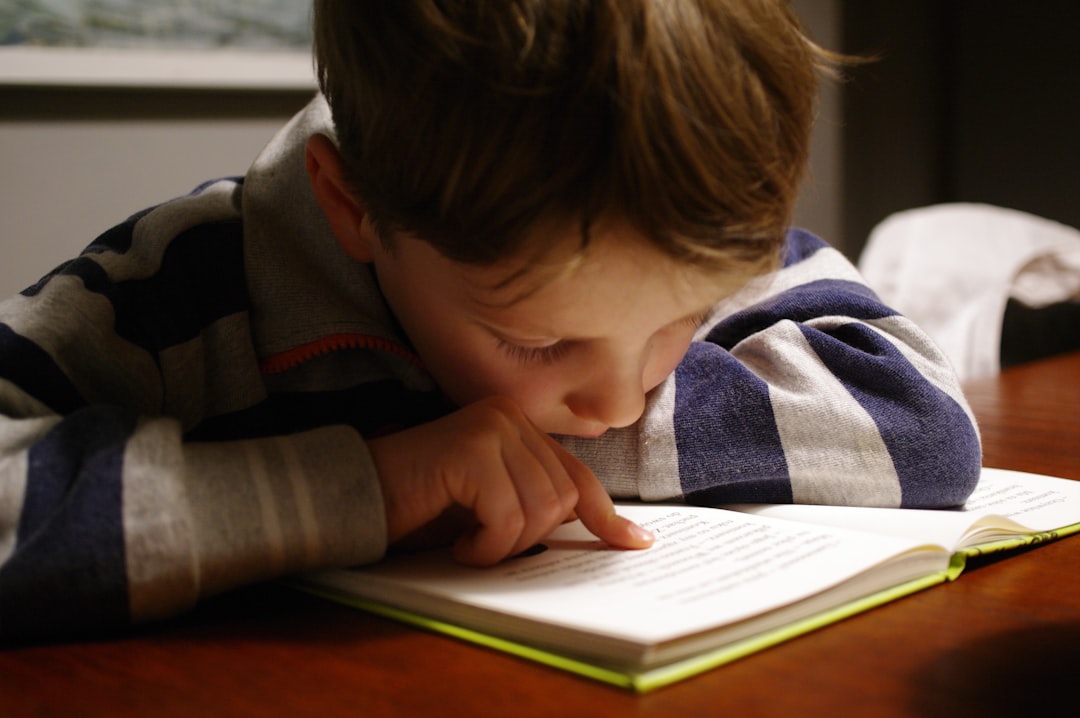
Primary 3 is the first year in Singapore in which school-based assessments count towards end-of-year promotion — the SA1 at mid-year and the SA2 at year-end. It is also the year the MOE English syllabus becomes meaningfully more demanding. Students who coasted through P1 and P2 may encounter real friction: longer reading passages, independent narrative composition, and grammar questions with less scaffolding. This guide explains where children typically struggle, what P3 English tuition in Singapore actually involves, and how to decide whether your child needs it.
What Changes in P3 English: The Syllabus Shift from P2
In P1 and P2, English instruction is heavily guided: writing is scaffolded with picture sequences, sentence starters, and teacher-led discussion. Comprehension at that stage is mostly literal — children retrieve information stated explicitly in the passage.
P3 changes both. Children are now expected to write independent narrative compositions — full stories with a beginning, middle, and end — without step-by-step scaffolding. Markers reward planning, paragraph structure, and vocabulary variety. In comprehension, passages become longer and more complex, and students encounter their first inference questions: questions that ask them to read between the lines rather than locate an answer word-for-word.
Grammar testing also becomes more systematic. Vocabulary MCQ questions are introduced, testing whether students can select the right word in context. Spelling and dictation continue, and accuracy under timed exam conditions now matters — a real shift from the unassessed P1 and P2 years. Not every child makes this transition smoothly.
The Five Areas Where P3 Students Most Commonly Struggle
Parents asking about P3 English tuition in Singapore are usually responding to one of a small number of recurring difficulties. Knowing which pattern your child falls into is more useful than signing up for general tuition without a clear focus.
- Composition planning and paragraph structure. Many P3 children can tell a story verbally but struggle to transfer it coherently to paper. They write in a single block, skip the middle build-up, or rush to the ending. Without a simple planning habit before they begin, compositions tend to feel underdeveloped and formulaic.
- Over-reliance on “and then” as a connector. This is almost universal in P3 writing. Children narrate events using “and then… and then…” without varying sentence structure or building cause-and-effect relationships. Moving beyond this requires exposure to a wider range of connectors and deliberate paragraph-variety practice.
- Comprehension inference questions. Lifting words from the text no longer earns marks when a question asks how a character felt or why they reacted as they did. The child must reason from evidence and express the implied meaning clearly — a genuine cognitive shift that takes time to develop.
- Grammar tense consistency. P3 students writing past-tense narratives frequently slip into the present tense mid-story without noticing — an error easy to miss when reading your own work.
- Spelling under exam conditions. Many children spell accurately when relaxed but make errors when writing fast under time pressure. Consistent dictation practice and the habit of checking their own compositions both help.
When P3 English Tuition Is — and Is Not — Necessary
Most P3 children do not need tuition. A child who scores in the 70s or 80s on SA1 or SA2, writes complete sentences with reasonable structure, and reads regularly in English is likely developing on track. The occasional grammar error or thin composition is normal at this age.
The signs that suggest P3 English tuition is worth considering are more specific:
- SA scores consistently below 65, particularly in Paper 2 language use and comprehension.
- Difficulty forming complete, grammatically stable sentences — not just word-choice errors, but basic sentence structure problems.
- Active avoidance of writing tasks: reluctance, frustration, or inability to get started without significant adult support.
- Comprehension answers that are consistently too short, too literal, or miss what the question is asking.
- Teacher feedback flagging specific concerns — particularly about composition development or reading level.
If one or two of these apply, targeted support for even a single term can reset confidence before difficulties compound into P4. If none apply, encouraging independent reading is usually the better investment.
What a Good P3 English Tutor Actually Works On
A tutor working effectively at P3 does more than mark compositions and correct grammar worksheets. The most useful work is about building habits that carry through the primary years.
For composition, the emphasis is pre-writing: a simple planning habit before the first sentence — mapping out three to four key moments — is more valuable for a P3 child than any vocabulary list. For comprehension, inference questions benefit from a two-step approach: identify the textual evidence, then state the implied meaning explicitly. For grammar and vocabulary, contextual practice beats isolated drilling; children retain grammar better when corrections are discussed in the context of their own writing.
Choosing Between a Tuition Centre and a Private Tutor for P3 English
Both formats can work well at P3. The tuition centre versus private tutor guide covers the trade-offs in full, but a few P3-specific points are worth noting.
At nine years old, children often need more individual attention than a class of eight to twelve allows — particularly for composition feedback. If writing development is the main concern, one-to-one or small-group tuition (two to four students) tends to be more effective. For children whose weaknesses sit mainly in grammar and vocabulary, a centre class can be a cost-effective option with the benefit of consistent pacing and peer exposure.
Private tutors for primary English in Singapore typically charge $25 to $45 per hour, depending on experience. One session per week of 60 to 90 minutes is a reasonable starting point for most P3 students.
How P3 English Fits Into the Broader Primary English Journey
P3 is the foundation year for skills examined more formally in P4, P5, and at PSLE. Composition habits — planning, paragraph awareness, varied connectors — are exactly what older students struggle to retrofit if they were never built. Addressing weaknesses now, while the stakes are lower, is almost always easier than correcting them under PSLE pressure. The PSLE English tuition guide outlines what that higher-pressure preparation looks like, and the P4 English tuition guide covers what follows directly.
Frequently Asked Questions
Is P3 too early to start English tuition in Singapore?
It depends on the child. P3 is the first year with assessments that count and the year the syllabus becomes more demanding. For a child struggling with composition or falling behind in comprehension, starting tuition at P3 is not too early — addressing habits early produces better outcomes than waiting for them to calcify in P4 or P5. For a child performing comfortably, there is no need to start simply because peers are doing so.
What should I look for in a P3 English tutor?
Look for a tutor who reads your child’s actual compositions and gives specific feedback — not just a score. Ask whether they teach composition planning and how they approach inference comprehension. A tutor who can explain what a strong P3 answer looks like (not only a weak one) is more likely to build transferable skills. One trial session is the most reliable way to assess fit before committing.
How often should a P3 child attend English tuition?
One session per week of 60 to 90 minutes is sufficient for most P3 students. Between sessions, the most valuable habit is independent reading in English — fiction, non-fiction, or anything the child genuinely enjoys. A child who reads regularly builds vocabulary and sentence sense at a rate that tuition alone cannot replicate.
My child’s SA1 score was below 65 — how worried should I be?
SA1 is mid-year, and there is time before SA2 to address gaps. The first step is to identify which components lost marks — composition, grammar, or comprehension. A targeted response focused on specific weak areas is more effective than trying to improve everything at once. Comprehension inference and composition structure are exactly where a good tutor can provide personalised feedback that school lessons may not have time to deliver.
If you are ready to find a tutor who specialises in primary English and understands the P3 syllabus well, the next step is simple. Find a P3 English tutor on AccTrain Academy and filter by subject and primary level to see tutors available in your area — whether you prefer home-based sessions or online arrangements that fit around your family’s schedule.