
Maths Tuition in Queenstown: Finding the Right Tutor
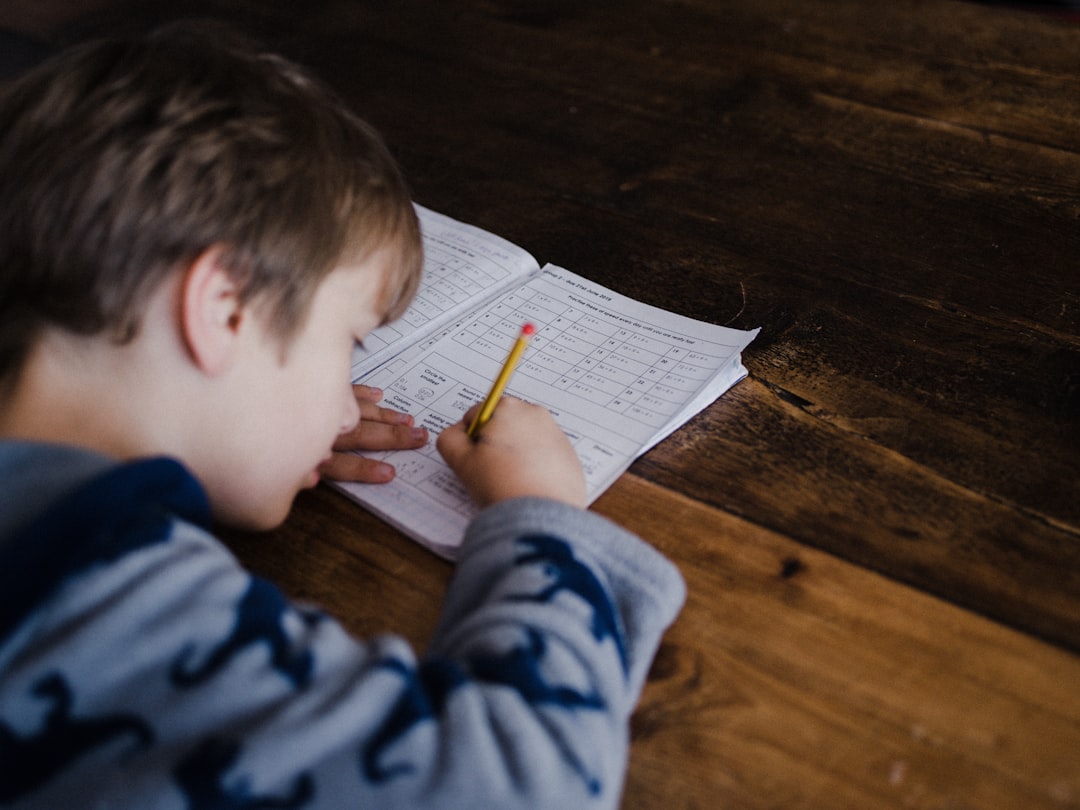
Maths tuition in Queenstown is a consistent need for families across the estate, whether a child is building foundational arithmetic in lower primary, working through PSLE heuristics and model drawing in Primary 5 and 6, or tackling the demands of E Math and A Math at secondary level. Queenstown is one of Singapore’s oldest HDB towns and home to a broad spread of families with children at every level of the schooling journey. This guide is designed to help you identify the right kind of support — not just find a tutor with an available slot, but make a genuinely informed decision about what your child needs.
Queenstown occupies a distinctive position in Singapore’s geography: it lies in the central-southern part of the island, bounded by Holland Village, Buona Vista, and the Alexandra corridor. Its proximity to the National University of Singapore (NUS) and the one-north research cluster means the area attracts well-educated families with high academic expectations. This tends to drive demand not only from students who are struggling but also from students performing well who want to maintain their edge.
Schools and the Local Learning Environment
Queenstown is served by a cluster of established MOE schools. At primary level, Queenstown Primary School, New Town Primary School, and Commonwealth Primary School are among the schools local children attend. At secondary level, students from Queenstown commonly progress to Queenstown Secondary School and Commonwealth Secondary School, with some families also looking towards schools in the nearby Buona Vista and Clementi corridors.
The estate’s mix of long-established HDB blocks and newer private housing means a varied demographic. Primary maths demand centres on PSLE preparation and on building the heuristics and model-drawing skills that the national curriculum emphasises from Primary 3 onwards. Secondary maths demand in Queenstown tends to split between students who need stable E Math support and those — particularly those targeting science or engineering pathways — who are working through A Math and need to build the algebraic and trigonometric depth it requires.
Primary Maths in Queenstown: Foundations and PSLE Heuristics
The MOE primary maths syllabus emphasises the concrete-pictorial-abstract approach — building mathematical concepts through physical manipulation, then diagrams and models, then symbolic notation. The famous Singapore model method (bar model) is the most visible expression of this approach, and it remains central to how primary maths problems are structured from Primary 3 onwards.
Common areas where primary students in Queenstown seek tuition support include:
- Fractions, ratio, and percentage — topics that require fluency with related concepts simultaneously
- The model method and bar modelling — students who cannot draw clear, labelled models will lose marks on problem-solving questions even when their arithmetic is correct
- Speed, rate, and time — a topic that causes consistent difficulty in Primary 5 and 6 because it requires multi-step reasoning
- Heuristics for non-routine problems — the PSLE always includes problems that do not fit a memorised method, and students need exposure to strategies such as working backwards, making a systematic list, or using guess-and-check efficiently
For a structured overview of what primary maths preparation involves at each year level, the primary maths tuition guide covers the curriculum progression and what tutors typically focus on at P3 through P6. Primary maths tuition rates in Singapore generally range from $25 to $50 per hour, depending on the tutor’s qualifications and whether sessions are group or one-to-one.
When Maths Tuition Helps — and When It May Not
Maths tuition is most effective when it addresses a specific, diagnosable gap rather than serving as a general supplement to schoolwork. Before committing to weekly sessions, it helps to identify the actual problem.
Tuition is most likely to help when:
- Your child can do computation correctly but consistently loses marks on problem sums — suggesting a gap in problem-solving strategy rather than arithmetic
- School assessment scores have been declining across consecutive terms, indicating that unresolved concepts are accumulating
- Your child has a specific topic block — for example, consistent difficulty with fractions or algebra — that is not resolving with school teaching and self-revision alone
- At secondary level, your child is taking A Math and finding the transition from the primary model-based approach to abstract algebraic reasoning genuinely difficult
- Your child is in the PSLE year and the examination requires more structured timed-practice with feedback than school alone provides
Tuition may not be the answer if the primary issue is that the child is not completing homework or practising between sessions. A tutor cannot substitute for the child’s own practice time — tuition accelerates improvement that the student is already working towards, but it does not replace the effort.
O-Level Maths in Queenstown: E Math and A Math
At secondary level, Queenstown students face the standard MOE split between E Math (Elementary Mathematics, compulsory for all students) and A Math (Additional Mathematics, taken by students aiming for STEM or more rigorous academic pathways).
E Math covers arithmetic, algebra, geometry, statistics, and trigonometry at a level accessible to most students with consistent effort. A Math is substantially more demanding — it introduces calculus, logarithms, binomial expansion, proofs, and advanced trigonometry — and it requires the kind of algebraic fluency that many students find genuinely challenging without deliberate practice. A Math is a prerequisite for H2 Mathematics at A-Level, making it important for students targeting engineering, computing, or mathematical sciences.
Common O-Level maths tuition needs in Queenstown include:
- E Math: simultaneous equations, functions and graphs, mensuration, and probability — areas where students often have formula knowledge but struggle with multi-step application questions
- A Math: differentiation and integration, trigonometric identities, coordinate geometry — topics where a single conceptual gap propagates errors across many question types
Secondary maths tuition rates typically range from $35 to $70 per hour, with experienced tutors and ex-MOE-teacher tutors at the higher end. For students specifically working on A Math, the A Math tuition guide explains the syllabus, common difficulty areas, and how to build the skills it demands. For E Math specifically, the E Math tuition guide covers the O-Level requirements in detail.
Choosing a Maths Tutor in Queenstown: A Practical Checklist
Not all maths tutors are equally suited to every level or learning style. Work through these questions before committing:
- Confirm the tutor’s level expertise. A tutor who is strong in primary maths may not have the depth for A Math at Secondary 3 or 4. Ask directly which levels and topics they teach most frequently, and request examples of past student outcomes at the relevant level.
- Ask how they diagnose gaps. The first session should involve reviewing recent school test papers or past-year questions to identify which topics and question types the child consistently struggles with. Tutors who dive straight into content without first understanding the gaps are not diagnosing — they are guessing.
- Ask how they balance content teaching with timed practice. For PSLE and O-Level preparation, timed past-year practice with mark-scheme feedback is essential. A tutor who only teaches new content without practising under examination conditions is not fully preparing the student.
- Clarify how errors are handled. Does the tutor keep a record of recurring error types and address them systematically? Or does each session start fresh? Systematic error tracking is a significant differentiator.
- Discuss whether sessions will be one-to-one or group. For students with significant gaps or high anxiety, one-to-one tuition allows the pace to be fully adapted. For students who are broadly on track and need structured practice, a small group setting can be effective and more affordable.
For a full framework on evaluating tutors across any subject, the guide to choosing a tutor in Singapore is a practical starting point. Families looking for a broader picture of tuition options in the area can also refer to the tuition in Queenstown overview.
Frequently Asked Questions
Should my child take A Math at secondary school?
This depends on their intended post-secondary pathway. Students who plan to study H2 Mathematics at JC — which is typically required for engineering, computing, or mathematics-intensive university courses — need A Math at O-Level as a prerequisite. Students heading towards arts, humanities, or social sciences may not need it. The decision is best made in consultation with the child’s school in Secondary 2, but if there is any chance your child will want to pursue a STEM pathway, taking A Math and working hard at it keeps that door open. Dropping it later is easier than trying to recover from not having taken it at all.
How early should primary school maths tuition begin in Queenstown?
There is no universal answer, but Primary 3 is often the point at which the curriculum’s problem-solving demands increase meaningfully — model drawing, fractions, and multi-step word problems all appear. Students who find this transition difficult often benefit from early tuition support to consolidate before the P5 content (ratio, percentage, rate, and speed) adds further complexity. Students performing well at P3 level generally do not need tuition, but keeping an eye on problem-sum accuracy from P3 onwards allows parents to intervene early if a pattern of difficulty emerges.
What is the difference between a tuition centre and a private home tutor for maths?
Both can be effective, but they serve different needs. A tuition centre provides a structured curriculum, access to a library of practice materials, and group accountability — which suits students who are broadly on track and benefit from peer learning. A private home tutor can adapt entirely to the child’s pace, focus exclusively on their weak areas, and provide one-to-one attention that a group setting cannot match. For students with significant gaps or those who need a tailored pace, a private tutor is usually the better choice. The tuition centre vs private tutor comparison sets out the full trade-offs if you are undecided.
How many sessions per week should my child have for maths tuition?
For primary school students with moderate gaps, one session per week of ninety minutes is usually sufficient if the child completes assigned practice between sessions. For secondary students in the examination year — particularly those taking A Math alongside E Math — one weekly session per subject is common. Increasing to twice weekly is generally only advisable in the final term before O-Level examinations, when timed paper practice and mark-scheme review become the priority rather than new content.
AccTrain Academy’s tutor directory can be filtered by subject, level, and location, making it straightforward to identify maths tutors serving Queenstown and the surrounding central-southern area. Find a maths tutor matched to your child’s level today and start building the understanding and confidence that lead to consistent improvement.