
English Tuition in Serangoon: Finding the Right Tutor
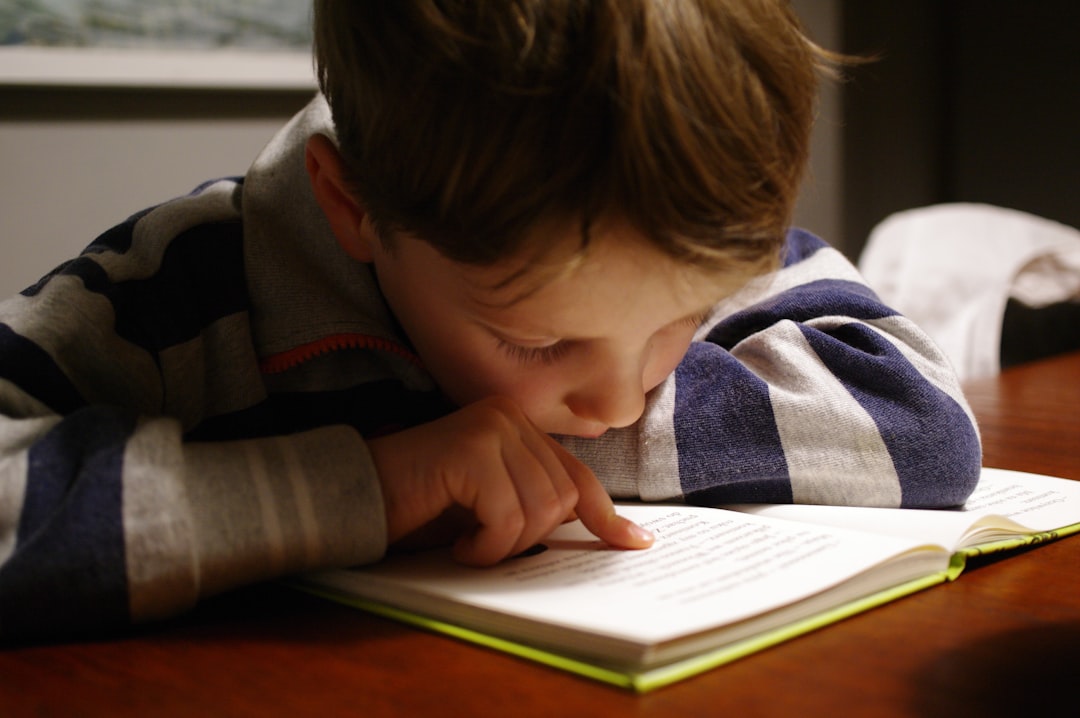
Finding reliable English tuition in Serangoon is something many families in this established north-east Singapore neighbourhood grapple with year after year. Serangoon sits at the intersection of mature HDB estates and older landed housing, drawing a broad mix of families whose children attend a variety of local primary and secondary schools. English is the medium of instruction for all subjects in Singapore schools, which means a gap in English — whether in writing, comprehension, or oral communication — ripples across a child’s entire academic performance. This guide helps Serangoon parents understand where English difficulty typically shows up, how to identify the kind of support that actually helps, and what to look for when choosing a tutor.
The demand for English tuition is not limited to struggling students. Many families seek support to sharpen a child’s composition writing, improve vocabulary range for comprehension cloze passages, or build the confidence needed for oral examination. At secondary level, the requirements change considerably — Paper 1 writing becomes more nuanced, and students sitting the O-Level must navigate situational writing and continuous writing with greater precision. Understanding what your child specifically needs is the first step to finding tuition that is genuinely worthwhile rather than simply filling time.
Serangoon’s Schools and the Families They Serve
Serangoon and its surrounding estates — including Lorong Chuan, Serangoon Gardens, and the Upper Serangoon corridor — are home to a number of well-regarded MOE schools. On the primary side, Serangoon Garden Primary School is a familiar name, as is Zhonghua Primary School in the nearby area. For secondary students, Serangoon Secondary School, Zhonghua Secondary School, and Peirce Secondary School are commonly attended by families in this part of north-east Singapore. Bowen Secondary School is another school that draws students from the Serangoon and Lorong Ah Soo area.
This clustering of schools across levels means there is consistent, year-round demand for tuition support in the neighbourhood. English sits at the centre of that demand — not simply as a subject in its own right, but as the language through which every other subject is examined. A child who struggles to express reasoning clearly in English will find that weakness showing up in History, Science, and even word problems in Mathematics.
Where English Difficulty Most Often Appears
English as a subject in Singapore schools is examined across several components, and tuition is most effective when it targets the specific component causing difficulty rather than treating English as a single undifferentiated problem.
- Composition writing (Paper 1): At primary level, this is picture-based composition. At secondary level, students write situational and continuous writing tasks under time pressure. Weaknesses here often involve thin content, poor paragraph structure, over-reliance on simple vocabulary, and grammatical errors that accumulate under timed conditions.
- Comprehension and language use (Paper 2): This paper tests vocabulary in context, grammar application in cloze passages, and reading comprehension. Students who read widely tend to perform better here, but many still make predictable errors — copying rather than paraphrasing, answering from prior knowledge rather than the text, or failing to use textual evidence.
- Oral communication: The oral component (reading aloud and spoken interaction) rewards clear pronunciation, fluency, and the ability to sustain a coherent response to a question or stimulus. Many students who write competently lose marks in oral because they have had little practice articulating opinions under mild pressure.
- Listening comprehension: Often underweighted in home preparation, listening is examined separately and requires attention to spoken inference and detail — skills that are built gradually rather than crammed.
A good English tutor will ask which of these components your child is struggling with before designing their sessions. Be cautious of any tutor who jumps straight into generic “essay practice” without first identifying the source of the weakness.
English Tuition in Serangoon: When It Helps and When It May Not
Not every child who finds English difficult needs tuition. Some students improve significantly simply by reading more regularly — fiction, non-fiction, and quality news coverage — and by writing and receiving feedback from a patient teacher at school. If your child’s school teacher is accessible and your child is keeping up with the fundamentals, structured private tuition may not be necessary.
English tuition becomes genuinely worthwhile in the following situations:
- Your child’s compositions consistently receive low marks despite effort, and they cannot identify why.
- Paper 2 errors are repetitive — the same grammar patterns or vocabulary misuses appearing test after test — suggesting the child has internalised incorrect forms.
- Oral scores are dragging down an otherwise reasonable overall grade.
- The child is heading into PSLE or the O-Level year with a significant English gap relative to their target school’s expected intake score.
- Your child is learning in English as a second language environment at home, and the volume of English exposure outside school is low.
In these cases, consistent, targeted support from an experienced tutor can make a meaningful difference. The key word is targeted: tuition works best when there is a specific problem to solve, not as a general supplement for a child who is already performing adequately.
What to Look for When Choosing an English Tutor in Serangoon
The following checklist is designed for parents in Serangoon who are beginning their tutor search. Run through it before committing to any tutor or programme.
- Check their familiarity with the current syllabus. MOE’s English Language syllabus has been updated in recent years. The Primary English Language syllabus and the O-Level English Language syllabus have distinct requirements. A tutor who last prepared students several years ago without updating their materials may be teaching to an outdated format.
- Ask about their marking approach. Strong English tutors annotate student work with specific, actionable feedback — not just a grade or a vague “needs improvement.” Ask to see a sample marked composition if possible.
- Request a diagnostic first session. The tutor should assess your child’s current level before deciding what to focus on. This might involve a short passage for comprehension, a timed writing exercise, or a review of recent school test papers.
- Clarify the session split. How much time will be spent on new content, reviewing student work, and timed practice? A balanced approach suits most students; one that is entirely paper-based without teaching may not address the root causes of weakness.
- Consider continuity. Frequent tutor changes are disruptive, especially for English where the tutor needs to track improvement in a child’s writing voice and recurring error patterns over time. Confirm the tutor can commit through the examination period.
For a broader framework on evaluating any tutor — not just for English — the guide on how to choose a tutor in Singapore covers seven practical checks that apply across subjects and levels.
PSLE English: What Primary Students in Serangoon Need
The PSLE English examination comprises four components: Writing (Paper 1), Language Use and Comprehension (Paper 2), Oral Communication, and Listening Comprehension. Students are assessed on a grade scale rather than the AL scoring system used for PSLE Mathematics and Science — English and Mother Tongue at PSLE use a separate grade (A1 to F9 scale). A strong PSLE English result supports school posting options considerably.
For primary students attending schools such as Serangoon Garden Primary or Zhonghua Primary, tuition preparation for PSLE English is most effective when it begins by Primary 4 at the latest. This allows time to build vocabulary breadth and composition fluency before the examination year, rather than relying entirely on exam drilling in Primary 6. In the PSLE year, tuition naturally shifts focus towards timed practice, oral simulation, and past-year comprehension work. Primary-level English tuition in the Serangoon area typically costs in the range of $30 to $50 per hour, depending on tutor qualifications and class size.
Secondary and O-Level English: The Shift in Expectations
Secondary English in Singapore is assessed under the O-Level English Language examination at the end of Secondary 4 (or Secondary 5 for N(A) students). The demands shift noticeably from primary: compositions require a more sophisticated register, situational writing tasks demand understanding of formal vs informal conventions, and comprehension passages become longer and more inferential.
Students at Serangoon Secondary or Zhonghua Secondary who are sitting O-Level English should be aware that the writing component rewards planning and editing as much as raw ability. Many students who wrote decent primary compositions find they need to unlearn some habits — overly dramatic openings, excessive dialogue, thin middle paragraphs — that were acceptable at PSLE but penalised at O-Level. A tutor experienced with secondary English tuition will work on these transitions explicitly. Secondary-level English tuition rates generally run from $40 to $70 per hour.
Many Serangoon families also weigh whether to use in-person tuition or opt for online sessions. Both have real merits depending on the child. The guide on online vs in-person tuition in Singapore is worth reading before making a decision, especially if you are considering tutors who may not be based locally but have strong English subject expertise.
Frequently Asked Questions
How do I know if my child needs English tuition or simply more reading practice?
Reading widely is genuinely effective for building vocabulary, comprehension, and a sense of English rhythm — and it is free. If your child reads regularly but still struggles with specific examination components, that is a stronger signal that tuition is warranted. If your child does not read regularly and is underperforming, encourage reading first. Tuition is most useful when it addresses a specific, identifiable gap that reading and school support have not resolved.
Should I look for an English tutor who specialises in PSLE or one who covers all levels?
For primary school children, especially those in Primary 4 to 6, a tutor who specifically knows the PSLE English format — the composition rubric, the comprehension question types, the oral format — will be more efficient than a generalist. At secondary level, the same principle applies: the O-Level English syllabus has distinct requirements, and tutors who regularly prepare students for that examination are better positioned to address exam-specific technique. Ask any tutor how many students at your child’s exact level they are currently working with.
How many sessions per week are typically needed for meaningful improvement in English?
For most students, one structured session per week is sufficient when combined with the work assigned between sessions — completing compositions, reading annotated feedback, and practising vocabulary in context. Two sessions per week may be appropriate in the months immediately before a major examination, particularly if oral practice needs dedicated time separate from written work. More than two sessions per week rarely translates into proportionally better results for English, which is a language skill that develops over time rather than through intensive cramming.
What is the difference between a tuition centre and a private home tutor for English?
Tuition centres typically offer group classes of varying sizes, often at lower hourly rates than private one-to-one tutors. They can be well-structured with curriculum materials and experienced teachers. Private home tutors offer more personalised attention and the flexibility to address your child’s specific weak areas directly. The right choice depends on your child’s learning style, the nature of their difficulty, and your budget. The comparison guide on tuition centre vs private tutor walks through the trade-offs in more detail to help you decide.
If you are ready to start looking, the most practical next step is to browse tutors with relevant English subject experience and availability in the Serangoon area. Find a tutor on AccTrain Academy and filter by subject, level, and location — you can specify secondary or primary English and narrow results to tutors accessible from the north-east region.